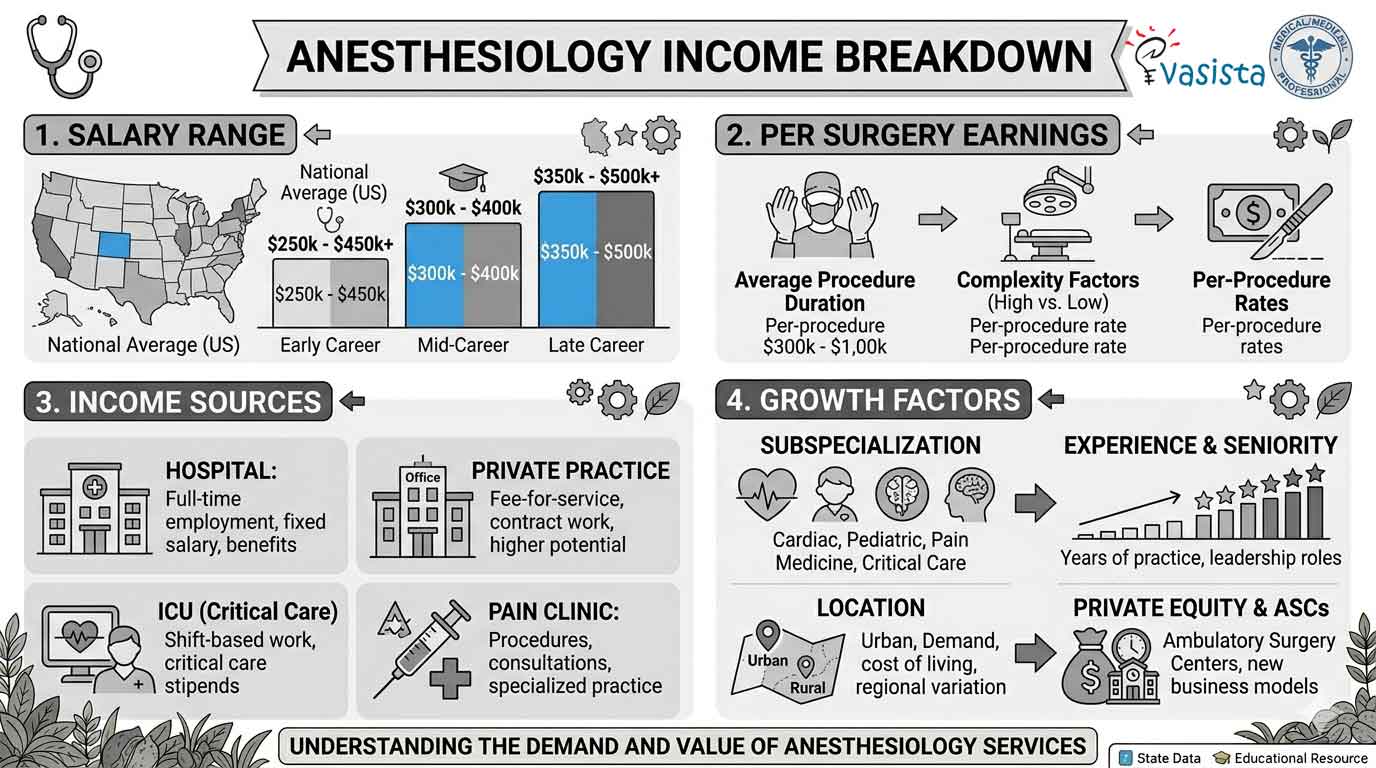
Anesthesiology Income Breakdown (Complete Guide)
Introduction
Anesthesiology is one of the highest-paying and most technically demanding medical specialties. An anesthesiologist plays a critical role in surgeries, pain management, and intensive care. But how exactly is their income structured?
This article provides a detailed anesthesiology income breakdown, covering salary components, influencing factors, and earning potential across different career stages.
1. Base Salary of Anesthesiologists
The primary income component is the fixed annual salary, which varies significantly based on experience, country, and type of employment.
📊 Average Salary Range (India)
- Junior (0–3 years): ₹8–15 LPA
- Mid-level (3–10 years): ₹15–35 LPA
- Senior/Consultant: ₹35–80+ LPA
🌍 Global Perspective
- USA: $300,000 – $450,000/year
- UK: £60,000 – £120,000/year
- Middle East: ₹60 L – ₹1.5 Cr/year
2. Income by Practice Type
🔹 Hospital Employment
- Fixed salary + bonuses
- Stable but limited upside
🔹 Private Practice
- Fee per case or surgery
- High earning potential
- Income depends on case volume
🔹 Freelance / Visiting Consultant
- Paid per procedure/session
- Highly flexible
- Income fluctuates monthly
3. Per Case Earnings (India)
Anesthesiologists often earn per procedure, especially in private setups.
| Surgery Type | Earnings per Case |
|---|---|
| Minor Surgery | ₹1,000 – ₹5,000 |
| Moderate Surgery | ₹5,000 – ₹15,000 |
| Major Surgery | ₹15,000 – ₹50,000+ |
👉 High-end hospitals and complex surgeries can significantly increase earnings.
4. Additional Income Streams
✔ Pain Management Clinics
- Chronic pain treatment (nerve blocks, injections)
- ₹50,000 – ₹3 L/month extra
✔ ICU & Critical Care
- Additional duty pay
- Night shifts increase earnings
✔ Teaching & Academics
- Medical colleges offer stable income
- ₹1–3 L/month depending on designation
✔ Medical Legal Consultancy
- Expert witness, medico-legal cases
5. Factors Affecting Income
Key Variables:
- Experience level
- City tier (Metro vs Tier 2/3)
- Hospital reputation
- Specialization (Cardiac, Neuro, Pediatric anesthesia)
- Networking with surgeons
- Work hours & case load
👉 Strong surgeon relationships = more cases = higher income.
6. High-Paying Subspecialties
Some anesthesiology branches command premium earnings:
- Cardiac Anesthesia
- Neuro Anesthesia
- Pediatric Anesthesia
- Pain Medicine
These require additional training but significantly boost income.
7. Monthly Income Scenario (India)
Example Breakdown (Private Practitioner)
- 3 major surgeries/day × ₹20,000 × 20 days
= ₹12,00,000/month
Even after variability, earning ₹5–10 lakh/month is realistic for established professionals.
8. Pros & Cons of Anesthesiology Income
Advantages
- High earning potential
- Consistent demand
- Multiple income streams
Challenges
- No direct patient recognition
- Irregular hours
- High responsibility & stress
Conclusion
The anesthesiology income breakdown reveals a highly lucrative yet demanding career. While salaried roles offer stability, private practice and specialization unlock significantly higher earnings.
For medical aspirants, anesthesiology is not just financially rewarding—it is a critical backbone of modern healthcare.